
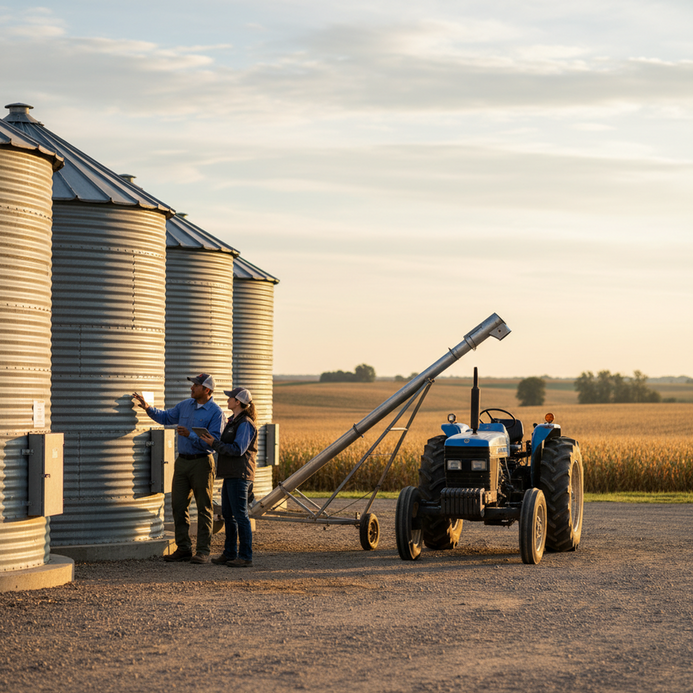
Ever wondered how to keep your harvested grain in top shape without breaking the bank? Grain storage efficiency is the key to less waste, better profits, and a smoother harvest season. If you manage a medium-sized farm and need to get the most out of each dollar, you’re in the right place. In this guide, you’ll find the best equipment choices to boost grain storage efficiency while staying within your budget. You’ll also get practical tips and real-world examples, so you can make decisions that fit your farm’s unique needs.
Why Grain Storage Efficiency Matters
It’s easy to overlook what happens after the combine leaves the field. But good storage is just as important as a good harvest. Grain storage efficiency means you keep more of what you grow, avoid spoilage, and spend less on repairs or wasted product. When you store grain well, you protect your hard work against weather swings, pests, and moisture. The right equipment helps you do it all with fewer headaches.
Imagine you’ve just finished harvest. Your bins are filling up, but the weather turns damp. If you don’t have a way to monitor moisture or keep air moving, you risk losing part of your crop. That’s why even budget-conscious farms are investing in smart storage tools. A few smart upgrades can mean the difference between a profitable year and a costly one.
Grain storage isn’t just about storing grain for a few days. Sometimes it sits in bins for months, waiting for the best market price or until you’re ready to sell. During that time, a lot can go wrong if the grain isn’t stored carefully. Mold, insects, and moisture buildup can all lead to major losses. Every year, farms across the country lose thousands of dollars simply because of poor storage conditions. By investing in efficient storage equipment, you can help make sure your hard work doesn’t go to waste.
Grain Bin Aeration Fans: The Unsung Heroes
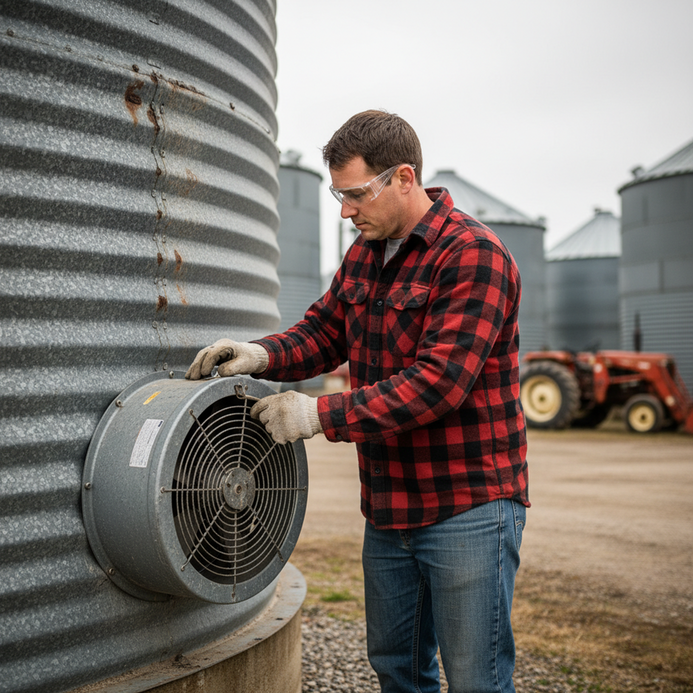
One of the best investments for grain storage efficiency is a solid aeration fan. These fans keep air moving through your bins, which helps control temperature and moisture. Without proper airflow, grain can heat up and spoil, even in a few days.
You don’t need the biggest or fanciest fan on the market. Start by measuring your bin size and grain type. For medium-sized bins, a 1 to 3 horsepower centrifugal fan often does the trick. These are powerful enough to move air through several thousand bushels but won’t drain your wallet.
Look for models with adjustable speed or built-in moisture controls. Some brands offer plug-and-play units, which are easy to install and maintain. Used or refurbished fans can also be a solid choice if you’re trying to stretch your budget.
Let’s take an example. Suppose you’re storing corn in a 10,000-bushel bin. A properly sized fan running just a few hours a day can keep the whole bin at a safe temperature and humidity. Over the season, that simple step can mean the difference between a top-quality crop and one that’s only fit for animal feed. And if your bins are older, adding a new fan or upgrading your existing one can bring a surprising boost in efficiency.
Aeration fans also help you react to changing weather. If a sudden warm spell hits after harvest, you can cool down the grain quickly. If you have a wet crop, steady airflow can keep moisture from building up. Fans give you the control you need, no matter what Mother Nature throws your way.
Grain Bin Monitoring Systems: Eyes Inside Your Bins
It’s tough to manage what you can’t see. That’s where grain bin monitoring systems come in. These systems use sensors inside your bins to track temperature and moisture in real time. If levels start to creep up, you’ll know right away and can take action, before a problem turns into a disaster.
Modern monitoring systems don’t have to be expensive or complex. Many solutions, like those from Farm Shop MFG, are designed for easy setup and use. You can start with a basic temperature cable and add more features as your budget allows. Some systems even connect to your phone, so you can check your grain from anywhere.
Let’s say you’re storing corn during a wet fall. A monitoring system will alert you if moisture spikes, so you can run your fans or move grain before it spoils. That kind of information can save you thousands in lost product.
What does a basic system look like? Most use long cables that drop into the grain. These cables have sensors spaced out every few feet, so you can spot hot spots or moisture pockets inside the bin. More advanced models track CO2 levels, which can warn you if insects or mold are starting to develop. As a bonus, many of these systems keep a digital record of conditions, so you’ll have proof that your grain stayed safe if you ever need to show a buyer.
For medium-sized farms, even a single cable in the tallest bin can make a big difference. Over time, you can add more cables or upgrade to remote monitoring without starting from scratch. It’s an investment that grows with your operation.
Grain Spreaders: Even Distribution for Better Storage
When grain piles unevenly in your bin, you get pockets of moisture and heat. That’s bad news for storage. A grain spreader sits at the top of your bin and helps distribute grain evenly as you fill.
For medium-sized farms, a mechanical spreader is usually enough. These units are affordable and don’t require much maintenance. By keeping your grain level, you allow air to flow more easily, which boosts grain storage efficiency. You’ll also make unloading simpler since the grain doesn’t settle into hard-to-reach spots.
Some spreaders are designed to handle a range of grain types, so you won’t need a separate device for each crop. If you’re storing wheat, soybeans, or corn, a versatile spreader saves both money and hassle.
Let’s look at a real scenario. Suppose you’re filling a 7,000-bushel bin with soybeans. Without a spreader, the grain stacks up in the middle, making the pile higher and denser there. That center pocket traps moisture and heat, increasing the risk of spoilage. With a basic mechanical spreader, the beans fall more evenly. Air can move through the whole bin, and you’re far less likely to have spoilage in one area.
Spreaders also reduce the amount of time you spend breaking up crusted grain or shoveling out stuck pockets during unloading. That means less labor, less stress on equipment, and fewer safety risks. Over a few years, those savings add up.
Budget-Friendly Grain Dryers: When Natural Air Isn’t Enough
Sometimes, air alone can’t get your grain dry enough for safe storage. That’s where grain dryers come in. While large, high-speed dryers can be pricey, there are budget-friendly options designed for medium-sized operations.
Batch dryers are a great example. They handle smaller loads, use less energy, and are simpler to operate than continuous-flow models. Some portable dryers can move from bin to bin, giving you flexibility without a big upfront investment.
If you’re really watching your spending, consider renting a dryer during peak harvest or teaming up with a neighbor to share costs. Just remember, drying grain to the right moisture level is a crucial part of grain storage efficiency. Wet grain in the bin means trouble down the road.
Let’s break down how a batch dryer works. You load a set amount of grain, run the dryer until it reaches the right moisture, then move it to storage. This process might take a few hours, but it’s manageable for most medium-sized farms. You’ll have more control over each batch, and you won’t need to run a large, expensive dryer nonstop.
Some newer portable dryers use propane or natural gas, which can be cheaper to operate than traditional electric models. Others are designed to hook up to your tractor’s power take-off, reducing your need for extra electrical wiring. Many farmers find that with careful scheduling and teamwork, a single portable dryer can serve several bins or even neighboring farms.
Smart Upgrades: Bin Ladders, Roof Vents, and Easy Access
Small upgrades can make a big difference. For example, sturdy bin ladders and safe roof vents help you check your grain without risk or hassle. Proper vents allow moisture to escape, reducing the chance of condensation and spoilage.
Access doors with tight seals stop pests, while easy-to-open hatches make inspection and maintenance less of a chore. These details are often overlooked, but over time, they add up to better grain storage efficiency and less worry for you.
Let’s say you’ve crawled up a rusty old ladder in the rain, or had to fumble with a stubborn hatch while inspecting your grain. Upgrading to a new ladder or adding a safer access platform can make a world of difference, not just for convenience, but also for safety. Roof vents, meanwhile, help hot air and moisture escape from the top of the bin. Without them, condensation can build up and drip back down, creating wet spots in your grain.
Even improvements like better bin lights or an easy-to-read level gauge can help you spot problems before they get serious. Many of these upgrades are quick to install and don’t require major changes to your bins. Over the years, they save time, reduce accidents, and help you keep an eye on your harvest.
Pest and Rodent Control Tools: Protecting Your Investment
No one wants to open a bin and find a mess left by mice, rats, or insects. Pests can turn a perfectly good grain bin into a loss in no time. While some problems are hard to prevent completely, there are budget-friendly tools that can make a big difference.
Start with simple steps like sealing cracks and adding rodent-proof doors. Mechanical traps, bait stations, and mesh screens over vents are all affordable additions. Regular bin cleaning tools, such as small vacuums or brooms designed for grain bins, help you keep things tidy and less attractive to pests.
Some farmers use safe, approved insecticides or natural deterrents, but physical barriers are your first line of defense. For extra control, consider simple monitoring devices like sticky traps. These let you know early if pests are getting in, so you can act fast before they multiply. Over time, these small investments pay for themselves in saved grain and less headache.
Choosing What’s Right for Your Farm
Every farm is unique. Your storage setup, local climate, and main crops all play a part in what equipment makes sense. The good news is, you don’t need to buy everything at once. Focus on your biggest pain points first. If moisture is a constant issue, start with fans and a monitoring cable. If you’re losing grain to spoilage, look at spreaders or a basic dryer.
Talk to other local farmers or reach out to equipment experts who know how to match solutions to your needs. Farm Shop MFG specializes in helping farms like yours boost grain storage efficiency without blowing the budget. They can help you find the right fit, whether you’re looking to upgrade one bin or your whole operation.
Don’t forget to check local extension offices or ag supply stores for advice, too. Many regional experts know what works best in your area’s climate. Sometimes, a small change, like switching fan settings or checking cables more often, can have an outsized impact on your results.
Conclusion
Efficient grain storage isn’t about spending the most money, it’s about choosing the right tools for your farm. With smart picks like aeration fans, monitoring systems, spreaders, pest control tools, and portable dryers, you can protect your harvest and your wallet. Ready to upgrade your grain storage efficiency? Contact us to learn more and get personalized advice for your operation.